Weight gain in middle age is not inevitable for women.
Large studies such as the Study of Women's Health Across the Nation (SWAN) and the Nurses' Health Study show that in middle age, women gain 0.4-0.7 kg per year, regardless of age, race/ethnicity, socioeconomic status, or menopause.
Middle-aged women also experience hormonal changes from the menopausal transition, associated with a precipitating decrease in lean mass and an increase in fat deposition, particularly with central distribution.
Similarly, the presence of vasomotor symptoms increases the risk of weight gain and changes in body composition, as they are associated with decreased physical activity and poor sleep quality.
A three-part plan to deal with weight gain in middle age.
- Weight gain prevention: A successful approach begins with educating women in their late 30s and early 40s about the risks of weight gain and changes in body composition that can accompany aging and menopause.
Although there are no specific guidelines, data from premenopausal women support the idea that a low-calorie diet consisting of 1300 calories per day, with reduced fat and cholesterol, may prevent weight gain during the menopausal transition.
After menopause, a low-fat diet combined with increased intake of vegetables, fruits, and whole grains, without intentional calorie restriction, could mitigate weight gain. While important for health, exercise alone generally does not attenuate weight gain, further emphasizing the need for patients to implement dietary changes.
2. Management of menopausal symptoms: It is estimated that approximately 80% of menopausal women experience vasomotor symptoms that can last up to a decade. Given the association between vasomotor symptoms and weight gain and changes in body composition, these symptoms should be treated effectively.
Hormone therapy for menopause remains the standard of care for vasomotor symptoms. When hormone therapy is contraindicated, physicians may consider non-hormonal treatment options. There are also non-pharmacological options, such as cognitive behavioral therapy and hypnosis, to alleviate menopausal symptoms.
3. Evidence-based treatment of overweight and obesity: screening for overweight and obesity at all medical visits throughout a woman's life. Although body mass index (BMI) is the universal screening tool for overweight and obesity, given the changes in body composition in middle-aged women, other measures such as waist-to-hip ratio or whole-body adiposity measurement should be considered in clinical practice.
In overweight and obese women, a comprehensive lifestyle intervention consists of nutritional therapy, exercise, and behavior modification. A caloric deficit, generally a reduction of 500 kcal relative to calculated energy expenditure, is fundamental for weight loss. During a weight loss intervention, protein intake ≥ 30% of daily caloric intake or ≥ 1.2 g/kg of body weight attenuates muscle mass loss, which is of particular importance as we age.
In middle-aged women, cognitive behavioral therapy for weight loss not only results in weight reduction, but is also associated with improvements in diet quality and quality of life.
A vegan diet can trigger hot flashes by altering the gut microbiome.
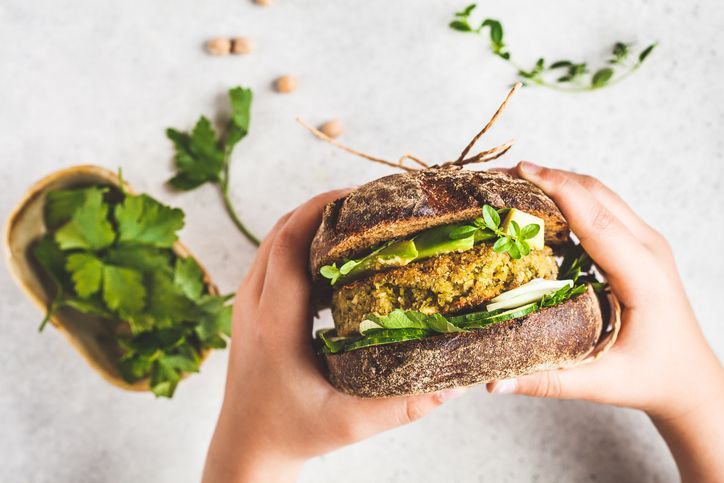
A study evaluated a 12-week low-fat vegan diet with soy and found that it led to significant changes in the gut microbiome that correlated with significant reductions in vasomotor symptoms in postmenopausal women.
- The relative abundance of Porphyromonas and Prevotella corporis decreased in participants of the dietary intervention, and this correlated with a reduction in severe daytime hot flashes.
- The relative abundance of Clostridium asparagiforme also decreased in participants on a low-fat vegan diet, and this change correlated with a reduction in the total number of severe nocturnal hot flashes.
"Analysis of the gut microbiome revealed important changes in microbiome composition in response to a low-fat vegan diet and strong correlations with symptomatic changes," the authors write. "Larger randomized clinical trials are needed to further investigate these findings."
SOURCES:
https://doi.org/10.1016/j.ctim.2023.103002
https://link.springer.com/article/10.1007/s13679-024-00555-2
https://emedicine.medscape.com/article/1947145-overview
https://pubmed.ncbi.nlm.nih.gov/15192443/
https://pmc.ncbi.nlm.nih.gov/articles/PMC6092036/
https://pubmed.ncbi.nlm.nih.gov/23091402/
https://pmc.ncbi.nlm.nih.gov/articles/PMC1483882/
https://pubmed.ncbi.nlm.nih.gov/14644697/